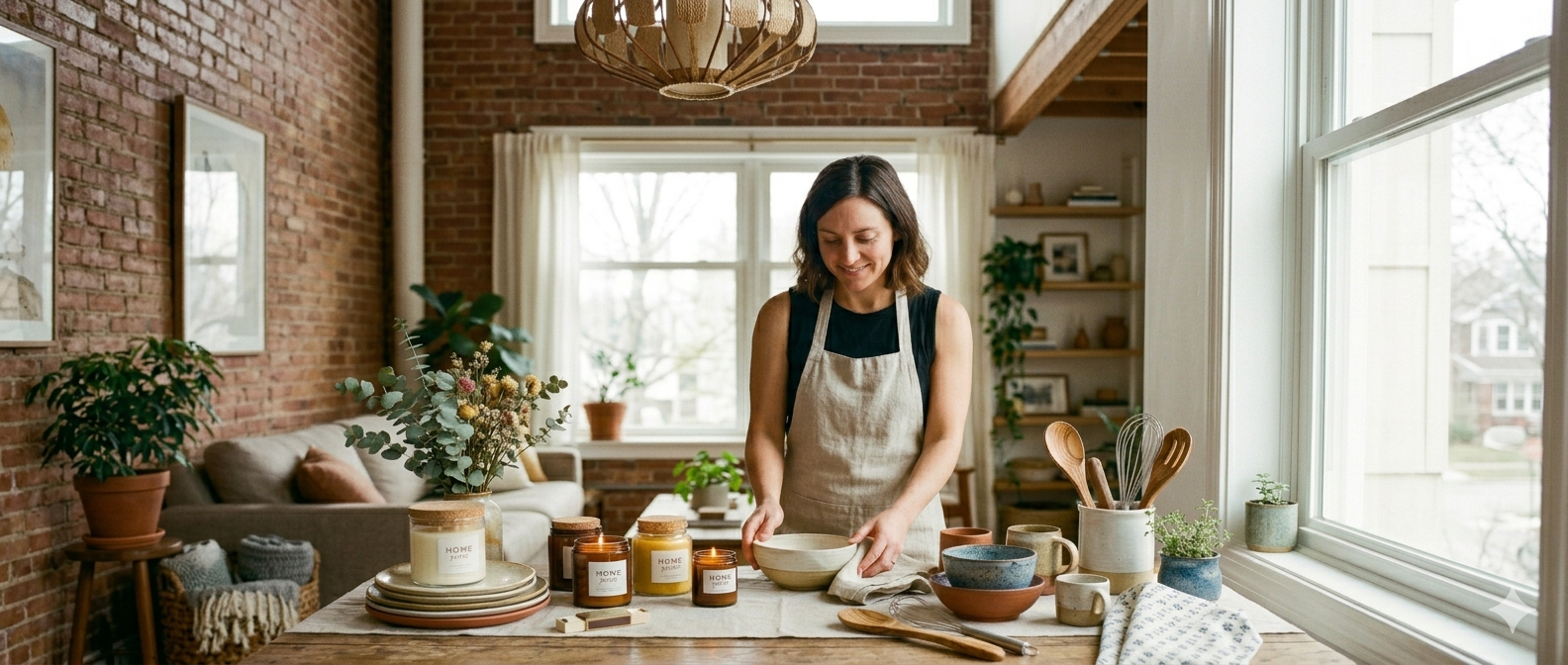
A strong living room does not need more objects. It needs better relationships between materials, light, negative space, and the few pieces allowed to hold attention.
Start with temperature, not objects
Warmth usually comes from tone before it comes from quantity. Natural wood, softened whites, aged metal, and a single darker anchor can do more than filling every surface.
When the palette is calm, you have more room to let one sculptural object or textile feel special instead of decorative for decoration's sake.
Let one surface stay almost empty
The instinct to style every table is what often makes a room feel restless. Choose one surface that carries almost nothing so the room can breathe.
That restraint makes a candle, a bowl, or a stack of books feel intentional rather than like filler.
Use texture as the final layer
Texture should be what turns a quiet palette into a lived-in one. Linen, nubby wool, ceramic glaze variation, and softened wood grain create depth without visual noise.